
Does a Rotten Egg Smell From the Hot Tap After a Summer Away Mean Water Heater Repair in Flagler Beach, FL?
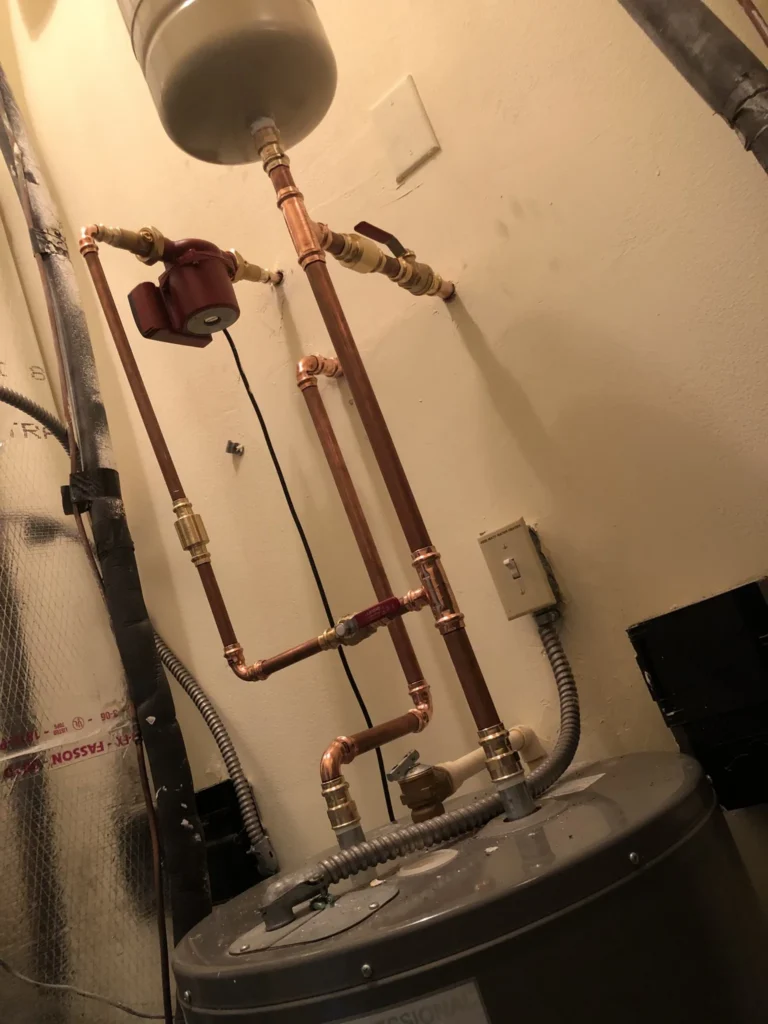
- A seasonal home in Flagler Beach sat from April to early October with the main water off and the electric water heater left on. On the first night back, every hot tap smelled like rotten eggs. The cold taps were fine.
- A smell at the hot taps only points at the water heater, not the city water. The usual cause is the magnesium anode rod reacting with sulfate in the water, sometimes helped along by bacteria living in a warm tank that nobody used for months.
- The owners had been told to replace a seven-year-old tank. They kept it. The magnesium rod came out, an aluminum one went in, and the tank and hot lines were chlorinated and flushed. The smell did not come back.
The situations described here are composites drawn from the types of jobs and decisions we encounter regularly. Names and specific figures are illustrative.
A two-bedroom concrete-block house in Flagler Beach, a few streets west of A1A, needed water heater repair in Flagler Beach, FL after its owners came home to hot water that smelled like rotten eggs. The heater was a 50-gallon electric tank in a hall closet, seven years old. The owners spend May through September up north. They shut the main off in April, left the water heater breaker on, and came back the first week of October to the smell at every hot faucet and in the shower. A neighbor told them the tank was rotting from the inside and needed to go, so they called asking for a price on a new one. The visit they needed cost a fraction of that, and the reason comes down to one rod inside the tank.
Hot side, cold side, and what the smell was telling us
The first thing we asked on the phone was whether the cold water smelled too. The Minnesota Department of Health gives a simple version of this test: after the house has gone a few hours without water use, smell the hot and the cold separately at each faucet and note which ones have the odor[1]. The owners did it that evening. Cold at the kitchen sink, nothing. Hot at the kitchen sink, strong. Hot in both bathrooms, strong. Cold in both bathrooms, nothing.
That split matters because it rules out most of the expensive answers. Penn State Extension explains that when the rotten egg smell shows up only in the hot water, chemical reactions inside the water heater may be the source. Water heaters carry a magnesium rod to slow corrosion of the tank, and that rod can chemically reduce sulfates in the water to hydrogen sulfide, the gas that smells like eggs[2]. North Dakota State University’s water quality program says the same thing in one line: an odor only from the hot tap points to sulfates in the water reacting with the magnesium anode[3].
Flagler Beach water is not well water. The city’s 2025 water quality report says the supply is groundwater from seven wells in the Floridan Aquifer, treated at a nanofiltration plant that uses chlorine for disinfection[4]. So the owners were right that nothing had changed at the street. What had changed was six months of the same 50 gallons sitting warm in a closet with nothing drawn off it.
Here is how the test results lined up, and what each pattern usually points to.
| Where the smell showed up | What it usually points to | This house |
|---|---|---|
| Hot taps only | The water heater: anode reaction or bacteria in the tank[1][2] | Yes, all three hot taps |
| Hot and cold taps | The water supply, a well, or the plumbing itself[1] | No |
| One fixture only | That fixture’s drain or trap, not the water | No |
| Only after the house sat unused | Bacteria growth in a warm, idle tank[1] | Yes, six months idle |
Why the neighbor’s answer was the expensive one
The neighbor was not wrong that a smell can come with a failing tank. But nothing else on this heater looked like failure. The pan under it was dry. The bottom seam had no rust. The T&P valve was not weeping. The tank was seven years old on the rating plate, which on its own does not decide anything. If the lining had been gone, we would have seen it in the pan long before we smelled it at the faucet.
The misconception is that the smell is the tank itself rotting. It is a gas made inside the tank, from what is in the water and what is on the rod. The Minnesota Department of Health describes a water heater as an ideal environment for it: warm enough for sulfur bacteria to live, and fitted with a magnesium anode that supplies the electrons that help turn sulfate into hydrogen sulfide[1]. Six months with no draw gave both of those plenty of time to work.
We see the same question from the other direction on wells west of town, where the smell is in the cold water too and the answer is treatment at the well. That case is the post on why well water smells like rotten eggs in Florida. This house was the opposite case: good water in, bad smell out of the tank.
Four ways to stop it, and the one we talked them out of
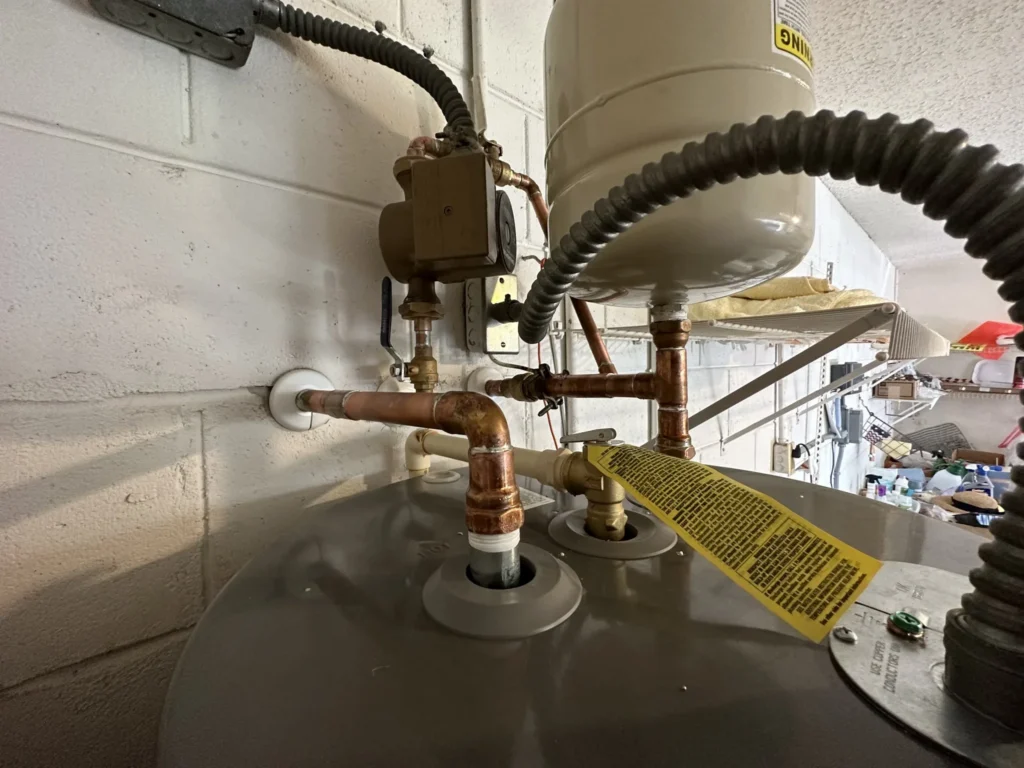
Once the anode was the suspect, there were four real options on the table, plus the replacement they had called about. The manufacturers and the extension programs agree on most of them. GE Appliances, which makes water heaters, says the odor can be reduced or eliminated in most of its heaters by replacing the anode with a less-active material rod, and that in some cases the tank and all the hot water lines also need to be chlorinated[5].
| Option | What it does | The catch |
|---|---|---|
| Pull the anode and leave it out | Removes the rod that drives the reaction[2] | Increased corrosion, a shorter tank life, and likely a voided warranty[2] |
| Swap magnesium for aluminum | Keeps corrosion protection without feeding the odor[1][2] | Use the manufacturer’s approved rod or the warranty is void[5] |
| Chlorinate and flush the tank | Kills sulfur bacteria in the tank[1] | If any bacteria survive, the smell can return within a few weeks[1] |
| Run the tank at 160°F for several hours | Destroys sulfur bacteria[1] | Scald risk; check the relief valve with the manufacturer first[1] |
| Replace the heater | New tank, new rod | Same water, same magnesium rod, same result if the house sits again |
The heat option was the one we set aside. The Minnesota guidance itself puts a caution on it and says to lower the thermostat afterward to prevent scalding[1]. The U.S. Consumer Product Safety Commission says most adults will suffer third-degree burns from 150-degree water in two seconds, and from 140-degree water in six[6]. The owners have grandchildren who visit at Thanksgiving. A tank that someone has to remember to turn back down was not the right fix for a house that changes hands between seasons.
Replacement did not make sense either. A new heater would arrive with a new magnesium rod, sit in the same closet on the same city water, and face the same six empty months next summer. The point where spending more stopped helping was right there: the money would have bought a new tank and kept the cause.
“Taking the anode out will stop the smell, but it shortens the life of the tank and will likely void the warranty. Put an aluminum rod in its place and the odor should go away while the tank stays protected.[2]“
Christian Laymon, Master Plumber and Owner, Florida Plumbing & Inspection
What the visit actually involved
With the breaker off and the cold supply closed, the tank was drained down enough to break the anode loose. The hex on these rods is often seized, and the rod is close to the full height of the tank, so in a closet with a low shelf it comes out flexed. The magnesium rod was about half eaten away, which is normal wear for its age and not a sign of a failing tank. The replacement was an aluminum rod from the heater’s manufacturer, which matters for the reason GE gives: a non-approved rod, or no rod at all, voids the warranty[5].
Then the chlorination. A measured dose of household bleach went into the tank through the anode port, the tank was refilled, and each hot tap in the house was opened until it smelled of chlorine, so the solution reached the hot lines too, as both GE and the Minnesota guidance describe[1][5]. It sat, then every hot tap was run until the chlorine smell cleared. The thermostats were checked and left at 120 degrees, the setting the CPSC recommends for homes[6].
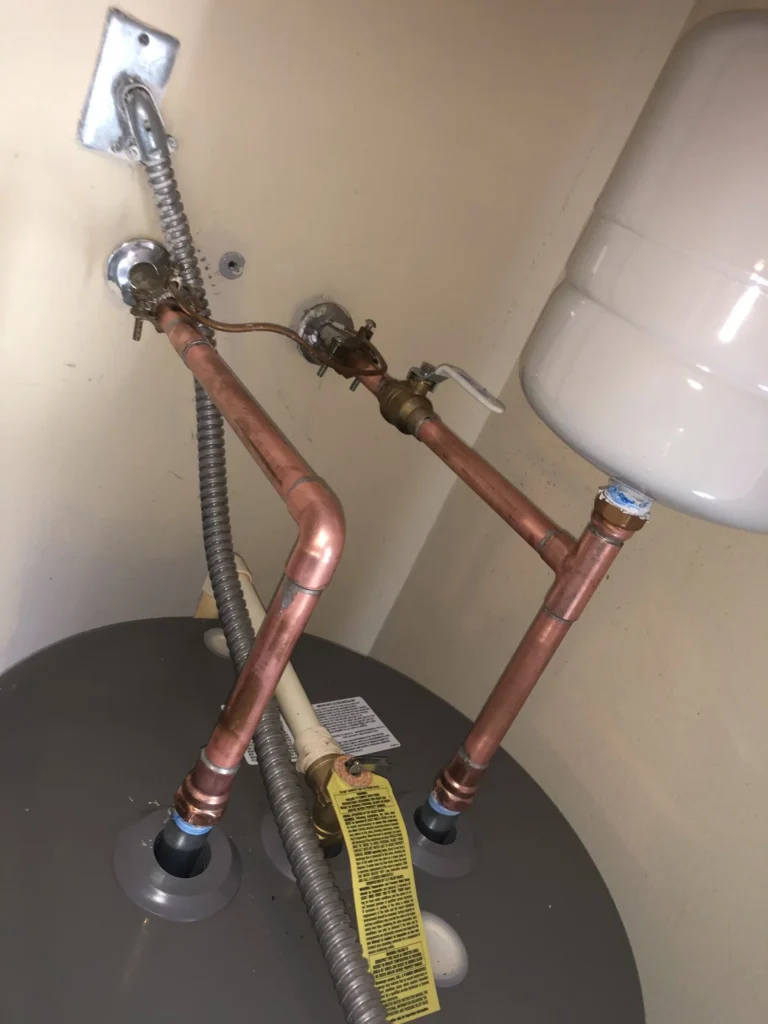
On the itemized invoice, the anode, the chlorination and the flush came to a little under a third of the replacement quote they had already been given. The rest of the visit was a look at the things a tank that age should have checked anyway, the same short list from our post on what water heater maintenance in Florida looks like: the pan, the T&P valve, the drain valve, the connections on top.
The questions they asked before we left
The first was whether the water had been safe to shower in. Penn State Extension says sulfur-reducing bacteria cause taste and odor problems but not health concerns, and that people can smell hydrogen sulfide well before it reaches harmful levels in water[2]. Unpleasant, not dangerous, was the honest answer.
The second was whether they should have turned the water heater off when they left. On a house with the main off for six months, the breaker off is reasonable, and it keeps a warm, idle tank from being a warm, idle tank. The trade-off is that someone has to turn it back on, and an electric heater should never be powered up until the tank is full of water. The Minnesota guidance also notes that if bacteria survive a chlorination, the smell can come back within weeks[1], so we asked them to run every hot tap for a few minutes after any long absence and call if the odor returned. We pointed them to our post on the main shut-off and what a snowbird should know before leaving for six months, since the same closing-up routine covers both.
The third was whether they needed a whole-house filter. On city water, with cold taps that smelled fine, no. A filter treats the water coming in. The water coming in was not the problem. If the cold side ever starts to smell too, that is a different visit, and the place to start is our whole-house water filtration service, after a test.
Three weeks later
The owners called once, toward the end of the month, to say there was nothing to report. The hot water smelled like water. The tank they had been told to replace is still in the closet, with a new rod and a date written on the side of it in marker.
Not every hot-tap smell ends this way. If the tank is past its years, has rust in the pan, or has a lining that is going, the smell is the least of the problems and replacement is the right call. But when the only symptom is the odor, and it is only on the hot side, the rod is the first thing to look at, not the last. If the hot side of your house smells the same way and you are looking at water heater repair in Flagler Beach, FL or elsewhere in Flagler County, our water heater installation and repair service starts with the same hot-and-cold test, and our plumbing repair and service team handles the rest of the checklist.
Sources
- Hydrogen Sulfide and Sulfur Bacteria in Well Water, Minnesota Department of Health
- Hydrogen Sulfide (Rotten Egg Odor) in Water Wells, Penn State Extension, updated 2024
- Rotten egg odor only from the hot water tap, North Dakota State University Water Quality
- 2025 Water Quality Report (Consumer Confidence Report), City of Flagler Beach
- Water Heaters: Hot Water Odor, GE Appliances
- Avoiding Tap Water Scalds (Publication 5098), U.S. Consumer Product Safety Commission