
What Are the Questions to Ask a Repipe Plumber Before You Sign, According to a Palm Coast Couple Who Wished They Had?
- Six questions, each one tied to something I found in their house: Is it permitted? Who is licensed? What material and what design? Who patches the walls? What happens to the old pipe? What is in the price?
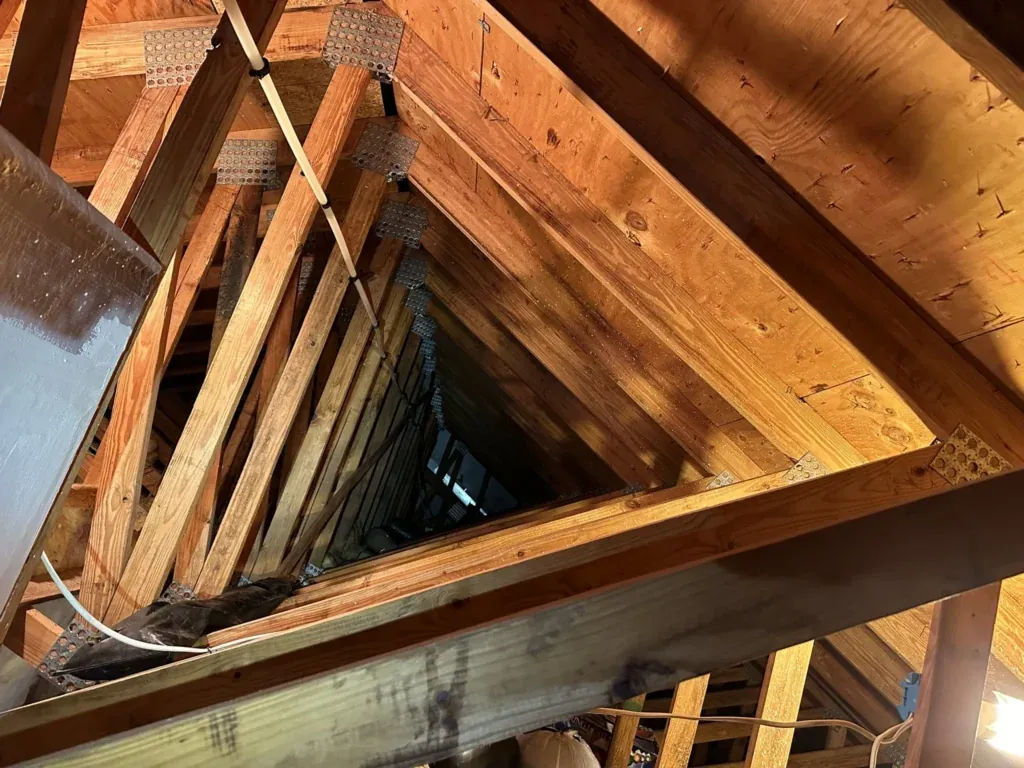
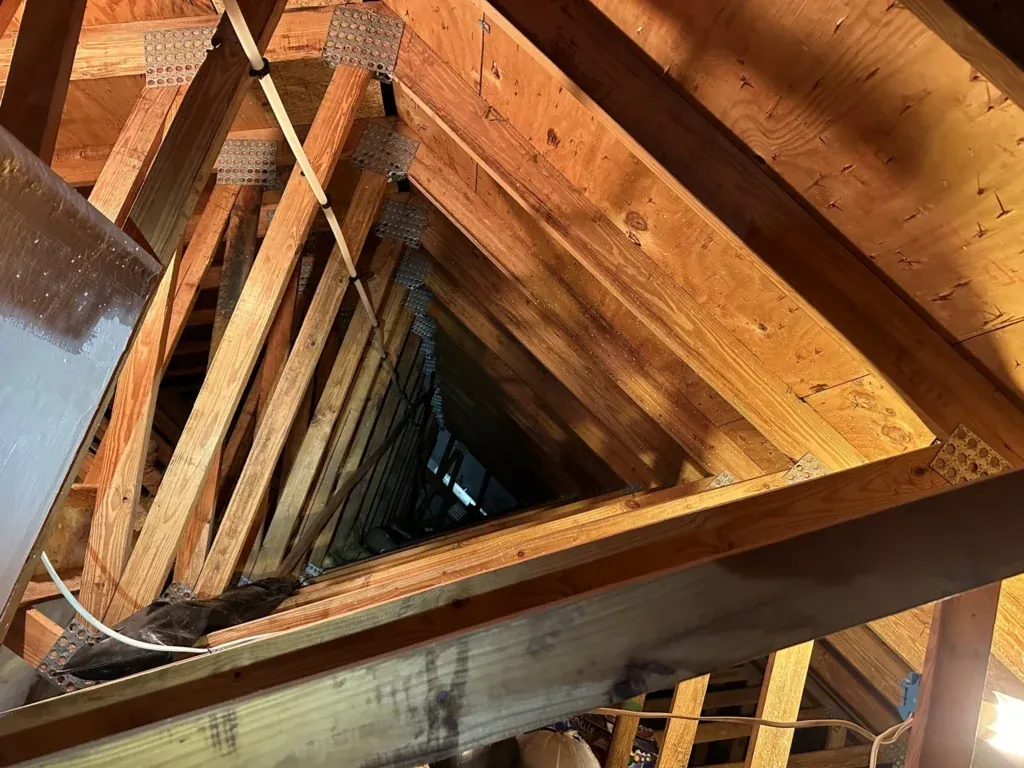
- The repipe I was called to fix had no permit, no manifold, unsupported PEX sagging across the attic, reused stops, and fourteen open rectangles in the walls.
- The license lookup and the city’s permit search take five minutes together and would have ended the conversation before the deposit.
- The fix was a second repipe of the attic and a permit after the fact. It cost more than doing it right would have.
The situations described here are composites drawn from the types of jobs and decisions we encounter regularly. Names and specific figures are illustrative.
They had paid for a repipe six months earlier, from a company that had come recommended on a neighborhood app, and they called me because a new drip had appeared at a bathroom ceiling and the walls still had rectangles cut in them that the company had said a drywall crew would handle. I went into the attic and came down with a list. They asked what the questions to ask a repipe plumber would have been, before they signed, and I wrote them down on the kitchen table in the order I had found the problems. This post is that list, with the thing in their house that each question would have caught.
Question one: is this work permitted, and can I see the permit?
What I found: no permit. The City of Palm Coast Building Division[1]‘s online permit search, which anyone can use by address, showed nothing on the house since a roof in 2019. A whole-house repipe is permitted plumbing work under the Florida Building Code, Plumbing[2] edition, with a rough-in inspection under pressure test and a final. No permit meant no inspector had seen the attic, which is how everything else on this list went unnoticed. It also meant that when they sell, the buyer’s inspector will search the same database and find a repipe with no record, and the insurer who may have asked for the repipe will not have the document that closes the finding. The question is a yes or no, and the answer can be checked before the deposit: ask for the permit number, and look it up.
Question two: who holds the plumbing license, and is it yours?
What I found: the company’s name on the invoice was not on the DBPR license lookup[3] as a plumbing contractor. It was a handyman business. Florida Statute 489[4] requires a licensed plumbing contractor for this work, and the license is what pulls the permit, which is why there was no permit. The lookup is free, takes a minute, and shows whether a license is active and in whose name. If the license belongs to someone other than the person you are dealing with, ask who is actually doing the work and who is pulling the permit, and get it in the contract. Chapter 713[5] of the Florida Statutes, the construction lien law, is the other reason: paying an unlicensed party for work on your house does not protect you from a lien by whoever they did not pay.
Question three: what material, and what design?
What I found: PEX, which was fine, run trunk-and-branch with tees and joints across the attic and inside walls, no manifold. And the PEX was lying loose across the trusses, unsupported, uninsulated, with one run sagging into a ceiling joist bay where it had chafed against a truss plate. That was the new drip. The Plastics Pipe Institute[6]‘s installation data specifies support spacing for PEX so it does not sag and chafe, and the code requires insulation on lines in unconditioned space. Neither had been done. A manifold design, with a continuous run to each fixture and no joints in the attic, would have had nothing in the attic to fail; a trunk-and-branch install can be done well, but it has joints in places nobody will see again, and it needs to be supported like anything else. The question to ask: is it a manifold or trunk-and-branch, how is it supported and insulated, and can I see a photo of an attic you have done? The material comparison is the post on PEX versus copper for a repipe in Florida, and what a supported, insulated attic install looks like day by day is the post on a repipe through the attic in a slab house.
Question four: who patches the walls, and is it in the price?
What I found: fourteen rectangles, open, six months later. The company had said a drywall crew would follow. No crew was named, none was in the contract, and none came. Every repipe opens walls; the question is who closes them and whether that is on the quote. My quotes list the patch to paint-ready as a line, or list it as excluded with the homeowner’s own drywall person named, and either is fine as long as it is written down. The couple had assumed it was included because it was mentioned. Mentioned is not written.
Question five: what happens to the old pipe, the stops, and the main?
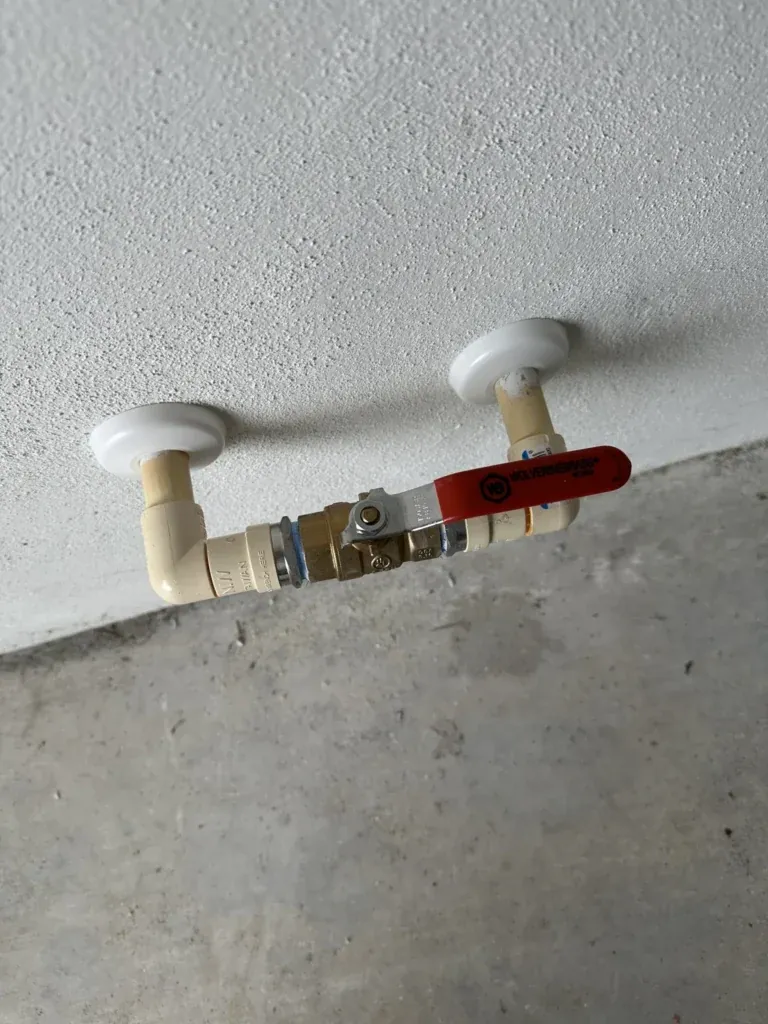
What I found: the old copper was cut and capped, which was correct. The fixture stops were the original 1980s compression stops, reused, and two of them wept when I turned them. The main was the original gate valve, which did not fully close, and there was no pressure-reducing valve on a house reading eighty-four pounds. A repipe that reuses thirty-year-old stops and a main that will not shut has replaced the pipe and kept the two most common leak points. The question: does every fixture get a new stop, is the main replaced, and will you check the pressure and install a PRV if it is high? It is a few lines on a quote and it is usually what a cheaper bid has left off, which is the comparison in the post on how much a repipe costs in Florida for a three-bath home.
Question six: what exactly is in the price, in writing?
What I found: a one-line invoice for a whole-house repipe and a number. No fixture count, no material specification, no permit line, no drywall line, no stops, no main. The number had been attractive because it was for less than a repipe. When the couple showed it to me next to my quote for the same house, every line on mine that was missing from theirs was something I had found wrong in the attic. An itemized quote is not a formality; it is the list of things you can check were done.
What it took to fix
A permit pulled after the fact, which the city allows on work already done with an inspection of the exposed work. The attic re-run: every trunk-and-branch section pulled, a manifold installed in the garage, continuous runs to each fixture, supported and insulated, the chafed run replaced. New stops at every fixture, a new main and PRV. The inspection, which passed. Then fourteen patches. Two days in the attic and a day on the walls, and a bill that, added to what they had already paid, came to more than my original quote would have. That is the usual math on a repair of a repipe: the second job costs what the first should have, and the first is gone.
The five-minute check before any deposit
The DBPR license lookup by company name, confirming an active plumbing contractor license. The City of Palm Coast Building Division permit search by the contractor’s name or by a previous customer’s address, confirming they pull permits. A written quote with a fixture count, a material, a design, a permit line, a drywall line, and stops and main listed. A photo of an attic they have done. And the question that sorts all of it: what is the permit number going to be, and when will the inspection be? A contractor who answers that without hesitating has done it before.
What people ask after a bad one
What should I ask a repipe plumber? Is it permitted, are you licensed, what material and design, who patches the walls, are the stops and main replaced, and what is itemized on the quote.
How do I check a plumber’s license in Florida? The DBPR license lookup, free, by name or number.
How do I check if a repipe was permitted? The city’s online permit search by address.
Is a manifold necessary? Not required by code. It is the better design, with no joints in walls or attic, and it is what I do.
Can a bad repipe be fixed? Yes. It costs about what a good one would have, on top of what was paid.
The insurance package this couple could not produce, and what it takes to bind a policy after a repipe, is the post on polybutylene pipes and insurance in Florida. What a repipe should be like a year on, with the pressure check and the manifold labels, is the post on what to expect after a repipe one hurricane season later. And the four days done in order, in a 1984 house, are the whole house repipe in Florida told day by day.
What the attic looks like now
Runs on the trusses, strapped and insulated, home to a manifold with labels. A permit on the card, closed. Walls painted. A pressure gauge that reads sixty. The couple keeps the one-line invoice from the first company in the same folder as the permit from the second, which is a fair summary of the difference.
If you are collecting questions to ask a repipe plumber before you sign, ask the six above and check two of them online first. Our whole house repipe service in Palm Coast answers all six on the quote itself, under license RF11067918, with the permit number on the page before the deposit.
Sources
- City of Palm Coast Building Division: permits and inspections
- Florida Building Code, Plumbing (8th Edition, 2023), Florida Building Commission
- Florida DBPR: license verification
- Florida Statute 489: contractor licensing
- Florida Statute Chapter 713: construction liens
- Plastics Pipe Institute: PEX-A technical and installation data