
Are Tree Roots in the Sewer Line the Reason a Palm Coast Yard Smells Every Summer Afternoon?
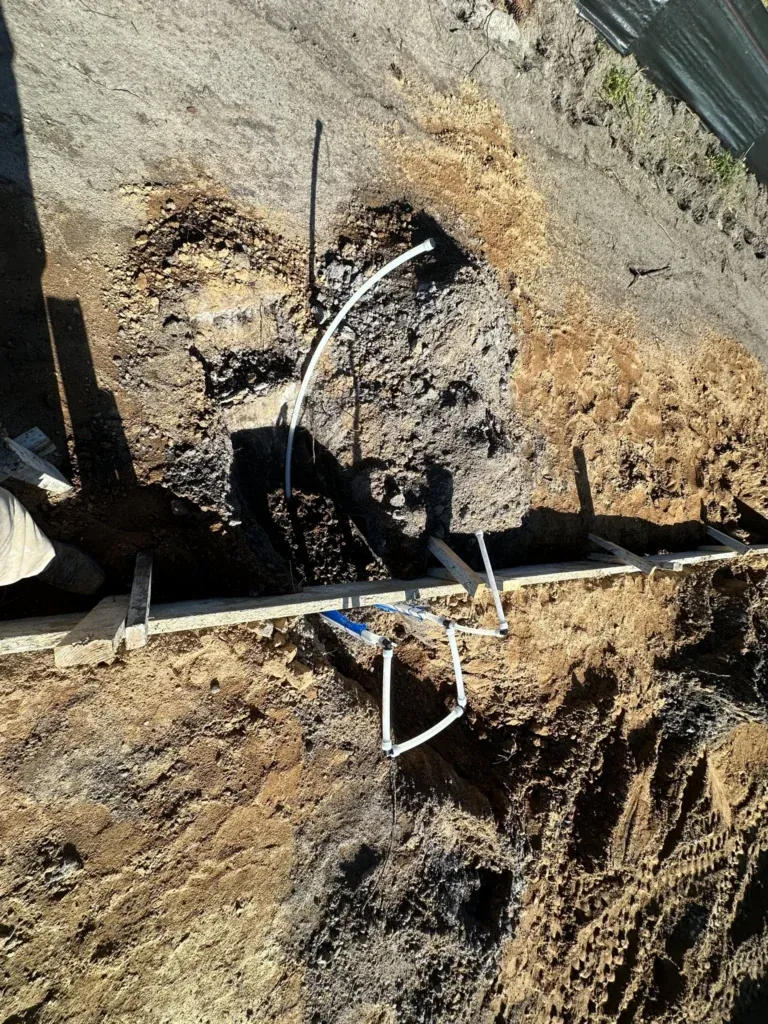
- Roots do not break into a sound sewer line. They find a joint that has moved and follow the moisture in. The joint is the problem; the roots are the symptom.
- In Flagler County the usual culprits are live oaks and, more than anyone expects, ficus and other landscape trees. Palms are rarely the cause.
- Three choices at 42 feet: cut and treat yearly, jet and line the joint, or spot-dig. The homeowner chose the middle path, and the reasons were about the driveway, not the tree.
- A cut lasts six to twelve months here. A lined joint ends the cycle.
The situations described here are composites drawn from the types of jobs and decisions we encounter regularly. Names and specific figures are illustrative.
The homeowner in Palm Coast’s W-section had two things in the front yard: a live oak that had been there longer than the house, and a smell that arrived every afternoon around three, right when the sun hit the driveway. He had asked the neighbors, checked the storm drain, and finally called me with the question he had been avoiding: whether the oak had put tree roots in the sewer line and, if so, whether the oak had to go. The answers turned out to be yes and no, in that order, and the camera is how I got there.
This post follows that visit from the smell to the flag on the lawn, then the three options I laid out on the driveway, what he picked, and what the tree actually had to do with it.
Why the smell shows up in the afternoon
A sewer line with a compromised joint leaks a little every time the house drains. In Palm Coast’s sandy soil over a shallow water table, that liquid does not go far; it sits in the sand around the joint. In the morning the ground is cool and the moisture stays put. By mid-afternoon in summer, the surface over the leak is warm enough to lift the smell, and a driveway, which holds heat, makes it worse. The smell was over the seam between his driveway and the front bed, which is where the camera later found the joint. If your yard smells on a schedule, the schedule is telling you where to look.
The camera, the counter, and the flag
I ran the camera from the exterior cleanout toward the street. Clean PVC for the first 40 feet, then at 42 feet a joint where the bell of one pipe had pulled about a half inch off the spigot of the next, and through that gap a curtain of fine white roots hung into the flow. Behind them, a wad of paper they had caught. The transmitter in the camera head let me walk the locator across the lawn until it sang, and I put a flag in the grass eighteen inches from the driveway edge, a little under four feet down. The oak’s trunk was fifteen feet away. That is not a coincidence, and it is not unusual.
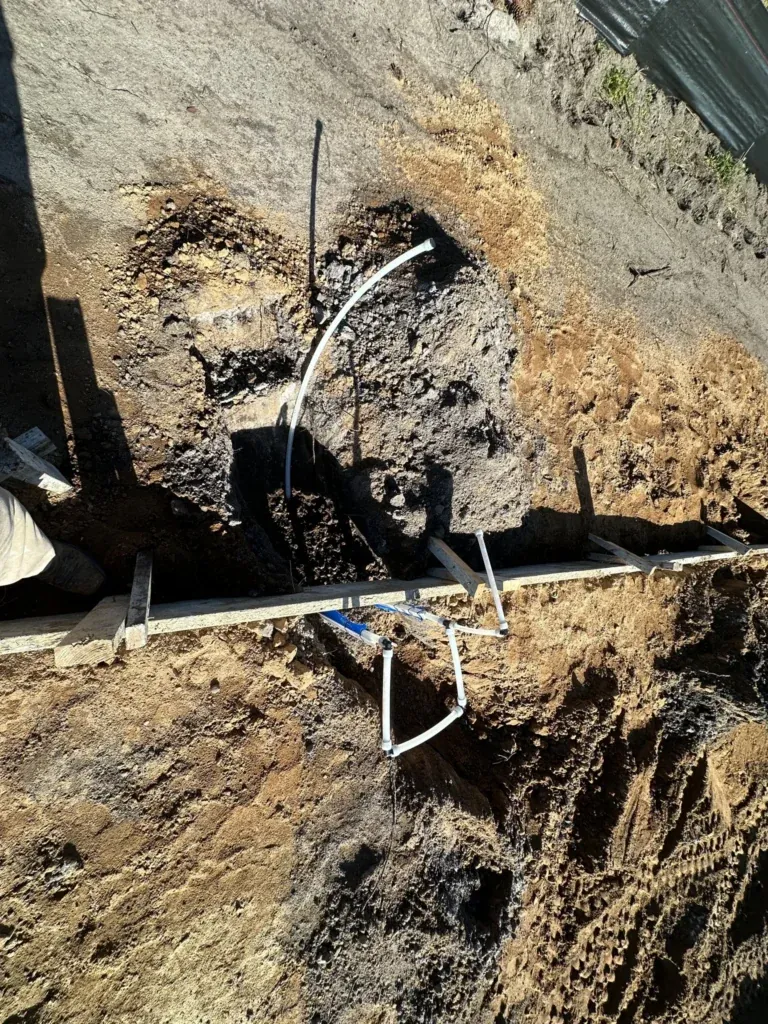
UF/IFAS Extension[1]‘s material on tree roots in Florida is the reference I point people to for the part they find hardest to believe: a live oak’s roots spread two to three times the width of its canopy and live mostly in the top eighteen inches of soil, where the water and oxygen are. A sewer joint four feet down that is leaking moisture into that zone is a beacon. The roots did not go looking for the pipe. The pipe advertised.
What is and is not the tree’s fault
I want to be clear about this because people cut down trees over it. A joint that is sealed does not admit roots. The Florida Building Code, Plumbing edition[2], specifies bedding and joint requirements for exactly this reason, and a properly bedded PVC line in Palm Coast can sit under an oak for decades without a root inside it. This joint had moved. Sandy soil settles, driveways get driven on, and a thirty-year-old line has had time to shift a half inch. Once the joint opened and started leaking, the roots did what roots do. Removing the oak would have left an open joint, a wet spot, a smell, and, within a year or two, roots from the neighbor’s tree or the hedge instead.
The trees I actually see most often in Flagler County lines are live oaks, because there are so many and they are so big, and ficus, which is planted as a hedge all over Palm Coast and is the most aggressive root system I deal with. Palms, which everyone suspects first, have fibrous roots that rarely get into a pipe. The oak stayed.
The three options, laid out on the driveway
Cut and treat. A cable with a root-cutting head chews through the mass and opens the line in an hour. It leaves stubs at the joint that regrow, and in this climate, with year-round growing conditions, that means six to twelve months. A foaming root treatment applied afterward slows the regrowth. This is the cheapest visit and the one that repeats every year. I do it on a lot of lines where the homeowner is planning to sell or where the joint is under something that cannot be disturbed.
Jet and line. A hydro-jetter cuts the roots flush with the pipe wall and clears the fragments, which I compare against the cable in the post on hydro jetting versus snaking on a Palm Coast kitchen line. Then a short cured-in-place liner, a resin-saturated sleeve inflated inside the pipe across the joint, seals the gap the roots came through. No digging, no driveway cut. The joint is no longer a joint; it is a continuous pipe. Roots have nothing to enter. This costs several times a cut-and-treat but happens once.
Spot-dig. Cut the driveway, excavate to the joint, replace the section, backfill, pour. It is the most direct repair and the most expensive because of the concrete, and it is what I recommend when the camera shows more than one problem in the same stretch or a joint too damaged to line.
What he chose, and the reason he gave
He chose jet and line. His reason was not the tree and not the price; it was the driveway. He had just had it sealed, and the thought of a saw cut through it moved the decision. The camera had shown a single displaced joint with a clean pipe on either side, which is the ideal lining candidate, and no belly, which would have changed the answer because a liner follows the pipe’s shape and does not fix a sag. We jetted in the morning, ran the camera to confirm the wall was clean, and lined the joint that afternoon. The smell was gone within the week as the sand around the joint dried out.
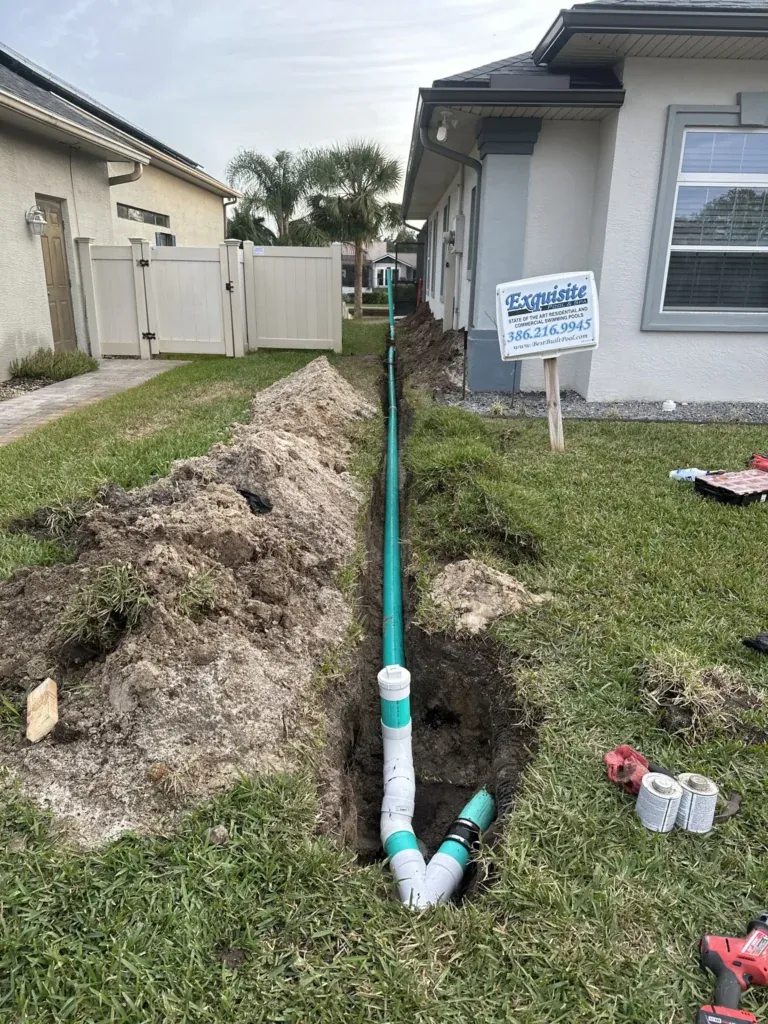
If the camera had shown a belly at the same spot, the answer would have been the dig, and I would have told him so. The InterNACHI sewer-scope inspection standards[3] that home inspectors use are useful here for homeowners too: a liner over a belly is a liner over a problem. That was the one thing that could have made his driveway decision the wrong one, and it is why the camera goes in before anyone quotes.
The insurance question, which I get every time
Homeowners policies in Florida generally do not cover tree-root damage to sewer lines. Roots are treated as gradual, and the reforms in the last few years made carriers less willing to cover anything that looks like maintenance. Some policies offer a service-line endorsement that covers the buried lateral for a small annual premium, and I tell people to ask their agent about it, because it is the one thing that turns a dig into a claim. He did not have one. He does now. That is the same territory as the four-point inspection questions I get on water heaters, and the same lesson: the paperwork you check before the problem is cheaper than the problem.
What I get asked on root calls
How do I know roots are in the line? A slow lowest drain, a gurgle, a smell over the line in the afternoon, a wet or green patch, and a camera that shows them. The signs are the same ones in the post on the main sewer line clog a Flagler County family ignored; roots are just the most common cause.
Can palm roots do this? Rarely. Oaks and ficus are the ones I find.
How are they removed? Cable with a cutting head, or a jetter. Then a treatment, a liner, or a dig depending on the joint.
Will they grow back after snaking? Yes, in six to twelve months here. A liner is what ends it.
Does insurance cover it? Usually not, unless you have a service-line endorsement. Ask.
Is there a way to keep it from happening again on the rest of the line? The maintenance habits in the post on how a Palm Coast customer went three years without a callback include an annual root treatment for exactly this kind of yard, and a cleanout, which this house had; if yours does not, the post on installing a sewer cleanout in Palm Coast explains why it is the first thing I would add.
Whether a line near a tree is worth scoping before you buy the house is the question in the post on what a sewer camera inspection costs in Palm Coast and when it is worth it, and the 1979 ranch with the oak in the full guide to clogged drains in Palm Coast homes, built from three houses on one street is the same joint, three doors down.
What the oak is doing now
Still there, still shading the driveway, still growing roots toward whatever is wet. There is nothing wet at 42 feet anymore. The smell is gone, the flag is gone, and the joint is a sleeve of cured resin that the roots cannot read. He asked whether he should worry about the rest of the line, and the honest answer is that the camera showed it sound, the driveway got a new seal instead of a saw cut, and the next look is a year out. Trees and pipes coexist fine. Trees and open joints do not.
If your yard smells on a schedule and there is a tree nearby, tree roots in the sewer line are the likely reason, and the camera is how to know which joint. Our drain cleaning and clogged drain service in Palm Coast locates the entry point, lays out the three options, and applies the $96 service call to whichever one the pipe calls for.